Not only Tradition and its Historical Values, but also Geographical Locality
Galih W. Pangarsa
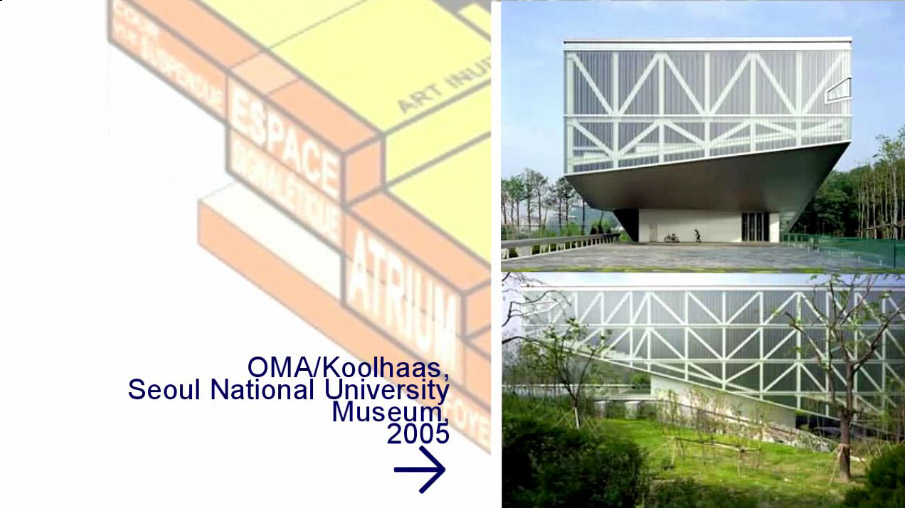
What is the different between Quebeq and Seoul?
(The video [19MB in swf format] is a part of my keynote speech presentation on SENVAR 12, November 10, Brawijaya University; click your refresh button to replay the video)
 n Venice Biennale 2010, Rem Koolhaas, a practising architect and also a professor in Practice of Architecture and Urban Design at the Graduate School of Design at Harvard University USA, categorized his works with OMA. They noted: “OMA and AMO has been obsessed, from the beginning, with the past. Our initial idea for this exhibition was to focus on 26 projects that have not been presented before as a body of work concerned with time and history. In this room, we show the documentary debris of these efforts. But 2010 is the perfect intersection of two tendencies that will have so-far untheorised implications for architecture: the ambition of the global taskforce of ‘preservation’ to rescue larger and larger territories of the planet, and the – corresponding? – global rage to eliminate the evidence of the postwar period of architecture as a social project. In the second room, we show the wrenching simultaneity of preservation and destruction that is destroying any sense of a linear evolution of time.”
Is past tradition and its historical values must constrain the dynamic of today societies? Indeed history is neither linear nor like geological layers. It is easier to comprehend if we pictured it as a constellation or nebulas: one that distances within thousands of light years from uscan be seen at the same time with our moon. Past tradition can also live in peace alongside current lifestyle. The difficulty lies in adjusting or arranging the cultural strategies.
What is certain, in observing sustainability in architecture as the entity of energy, time, and space , there are some notes need to be drawn, as follows:
Architecture is never about single building or dead monument; architecture is a part of built-environment, and also a part of living culture. Thus, architecture is both societally and ecologically dynamic, spatially and temporarily open ending. Unfortunately, too many architecture education studios in Indonesia, and apparently in other places around the world, implicitly teach their student the outlook that architecture is a “work that thoroughly complete”. In people’s lives reality everywhere, a building is never ‘dead’: it always adjusts to the dynamic of life. Few buildings served as a real life texbook; in a way its authenticity is strictly maintained. Are all the student taught to serve that little fraction of needs? Back to Koolhas/OMA’s note, is it inappropriate to place architecture as social project for students (or future architects)? Even the natural environment surrounding an architecture is ever changing and diverse. Each locality is unique. It is not too easy to apply one place experience to another. In the end, shouldn’t architecture put itself on the equilibrium between man and nature? But in today’s reality, Eurocentrism dominates architecture paradigm of most intellectuals all over the world. And then, so dead the architecture body of knowledge...
Indonesian version avaliable; please click "Baca Lanjut" tombol below. Thankyou.
Di Venice Biennale 2010, Rem Koolhaas, praktisi yang juga "Professor in Practice of Architecture and Urban Design" di the Graduate School of Design at Harvard University, USA, mengkategorisasi karyanya bersama OMA. Catatan mereka: “OMA and AMO has been obsessed, from the beginning, with the past. Our initial idea for this exhibition was to focus on 26 projects that have not been presented before as a body of work concerned with time and history. In this room, we show the documentary debris of these efforts. But 2010 is the perfect intersection of two tendencies that will have so-far untheorised implications for architecture: the ambition of the global taskforce of ‘preservation’ to rescue larger and larger territories of the planet, and the – corresponding? – global rage to eliminate the evidence of the postwar period of architecture as a social project. In the second room, we show the wrenching simultaneity of preservation and destruction that is destroying any sense of a linear evolution of time.” Apakah tradisi masa lalu dan nilai-nilai sejarahnya harus membelenggu dinamika masyarakat kini? Apakah arsitektur tak lagi diharapkan sebagai projek sosial? Memang sejarah bukanlah linear atau seperti lapis-lapis geologi. Lebih mendekati jika digambarkan sebagai gugusan bintang atau nebula-nebula: yang berjarak ribuan tahun cahaya dapat dilihat secara bersamaan dengan bulan bumi yang berjarak sangat dekat dari kita. Tradisi masa lalu pun dapat hidup damai berdampingan dengan gaya hidup kini. Yang sulit adalah menyiasati atau mengatur strategi kebudayaannya.
Yang jelas, jika mengamati kesinambung-lanjutan dalam arsitektur dan lingkungan binaan sebagai kesatuan kenyataan ketenagaan, waktu, dan ruang , ada beberapa catatan yang sepantasnya ditarik, sebagai berikut:
Arsitektur bukan bangunan tunggal, atau monumen mati; arsitektur adalah bagian dari lingkungan binaan, dan juga bagian dari budaya yang hidup. Dengan demikian, arsitektur secara sosietal dan ekologis dinamis, dan secara spasio-temporal selalu terbuka (untuk tumbuh-berkembang lanjut). Sayangnya, masih terlalu banyak studio pendidikan arsitektur di Indonesia dan tampaknya, juga hampir merata di belahan bumi lain, yang secara implisit mendidikkan sikap kepada para mahasiswa bahwa arsitektur adalah “sebuah karya yang selesai tuntas”. Pada kenyataan hidup rakyat di hampir seluruh dunia, bangunan tak pernah “mati”: selalu menyesuaikan diri dengan dinamika hidup. Hanya sangat kecil bangunan yang menempati posisi sebagai buku pelajaran nyata. Artinya, keasliannya terjaga ketat. Apakah seluruh mahasiswa dididik untuk melayani sebagian sangat kecil kebutuhan itu? Kembali pada catatan Koolhaas/OMA, tak pantaskah posisi arsitektur sebagai social project bagi mahasiswa (atau calon arsitek?). Alam lingkungan tempat eksistensi arsitektur pun selalau berubah. Sangat majemuk pula. Setiap lokal mempunyai kekhasannya. Tak terlalu mudah menerapkan begitu saja pengalaman suatu lokal pada lokal lain. Akhirnya bukankah arsitektur mesti mengambil posisi pada titik perimbangan –berpihak tak hanya pada manusia, tetapi juga menjaga kelestarian alam-- sebagaimana yg saya tulis di atas? Pada kenyataan sekarang, Eurocentrism menguasai pola pikir berarsitektur hampir seluruh intelektual di dunia. Maka, matilah keilmuan arsitektur…
Label: Wacana
 esain, ibarat hasil baca sesuatu yang dituliskan kembali. Membaca apa? Sejak dari dalam kandungan, manusia telah belajar. Bahkan --tentu saja bagi yang meyakininya-- sejak dari manusia berada di alam ruh. Manusia adalah
  emampuan mengamati alam, atau "membaca lingkungan" baik dalam skala tapak maupun regional, tidak diperoleh dengan tiba-tiba. Bahkan mustahil diajarkan hanya dengan buku dan gambar. Betapa banyak pun gambar itu. Kejelian membaca itu memerlukan kepekaan yang lebih banyak didominasi potensi spiritual,
 rsitektur Nusantara tinggal remah-remah, bahkan nyaris punah. Sementara itu, kita perlu sadar sepenuhnya, betapa pen-tingnya identitas pribadi, baik bagi individu maupun bangsa, karena sudah menjadi kodrat manusia ia berperan sebagai subjek yang di-mintai pertanggung-jawaban.
 ang jelas manusia Nusantara berkembang, seperti yang dipaparkan buktinya oleh banyak artefak arkeologis prasejarah di seluruh tanah air kita, baik jejak peradaban maupun regawinya. Perkembangan arsitektur di Indonesia tidak bisa lepas dari perkembangan arsitektur dunia. Maka desain-desain sejak dari langgam Hindu sampai dengan yang kontemporer seperti karya Daniel Liebskind, Tadao Ando, atau Rem Koolhaas, semua masuk ke Indonesia sebagai informasi keilmuan dan desain yang mengilhami para arsitek kita. Arsitek-arsitek (baik formal maupun tidak), pada kehidupan manusia adalah mereka yang menempati posisi utama dalam pembentukan arsitektur sebagai simbol peradaban suatu bangsa atau komunitas. Maka, sangat penting untuk memahami kembali bahwa manusia adalah homo simbolicus yang senantiasa membuat dan maknai kembali simbol-simbol peradabannya, seperti kita pun perlu memaknai kembali arsitektur rakyat kita, yaitu Arsitektur Nusantara. Dengan demikian, penelitian tentang Arsitektur Nusantara sangat penting, agar kita dapat memaknai kembali Arsitektur Nusantara dengan bijak. Bukan untuk kembali ke masa lalu, tapi justru untuk mempersiapkan masa depan yang lebih baik.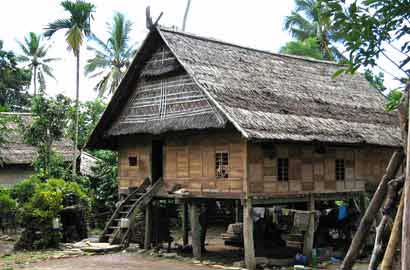

 emikiran arsitektur di belahan dunia yang lain bergumul dengan berbagai issue besar: tentang keragaman budaya, krisis lingkungan, inovasi teknologi, atau juga bagaimana kaum praktisi ini dapat tetap hadir berarsitektur dalam ‘tekanan’ pemilik modal untuk mewujudkan idealisme sosialnya, dan banyak lagi. Praktek arsitektur di kota besar Indonesia (dominasi Jakarta masih sangat nyata) tampaknya masih berjalan nyaman pada ranah ekplorasi estetik ataupun upaya menggapai pencapaian wadag visual yang sensasional demi kepuasan kalangan atas. Tentu ini tidak serta merta dipersalahkan.
 pa sebenarnya Arsitektur Nusantara? Tampaknya globalisasi secara tidak langsung menjadikan penyatuan kata ”arsitektur” (yang berkonotasi suatu pola pikir, kesepakatan yang mengglobal tentang seni bangunan) dan kata ”Nusantara” (berkonotasi suatu lokalitas geografis) menjadi agak asing. Seolah-olah ada dua kutub yang dialektik. Tetapi sesungguhnya ada yang lebih penting di balik silang-sengkarut argumentasi yang substansinya hanyalah mencari (untuk sekedar mengetahui) arah perkembangan arsitektur pada sumbu ruang-waktu; secara geografis maupun historis.
 Arsitek-arkeolog bersepakat bahwa ciri arsitektur rumah megalitikum Dongson dari abad II SM dengan awalan dan akhiran atap yang berjuntai sebagai pensetimbang (“counter weight”) untuk mengurangi momen lapangan dari nok di sepanjang balok bubungan pada arah memanjang bangunan, masih dapat ditemukan pada Jawa Tengah abad VIII seperti yang direliefkan sebagai lumbung pada Candi Borobudur, bahkan atap lumbung adat masyarakat Gayo Alas beranang, tongkonan Toraja atau rumah lontik Riau awal tahun 1970-an. Tambahan pula, meski ada perbedaan-perbedaan tektonik, secara antropo-linguistik terkadang elemen atap itu mempunyai kesamaan nilai makna. Yaitu, agar penghuni rumah memperoleh kehidupan mulia. Di “daerah karakter tektonik” yang sama-sama menempati suatu wilayah bahari nan luas itu, rumah —bagi manusia yang hidup, arwah yang mati atau bahkan para dewa— tampaknya dimengerti sebagai wadah berisi kandungan dan tempat meraih suatu puncak kehidupan mulia.
 Nusantara is not a political territory of modern Indonesia; it would be a Southeast Asian cultural space spread out between Formosa Island in North to Alor Isles in South, between Aceh in West and Papua Island in East, including coastal regions of Southeast Asia: Space of very high cultural plurality in sense of geo-historically, its system of beliefs, and society. The Nusantara Archipelago is essentially different from another Asian continental countries and archipelagoes with four seasons such as Japan. And also, Southeast Asian wide-ranging area have played a role as a “bridge” and “glue”, between India and Arab to China during the spreads of Buddhism, Hinduism and Islam.
 As has been shown through many works of scholars, “traditional” or “conventional” point of view on Nusantara is a linguo-anthropological or a historical, in which Nusantara is considered as a part of Austronesia. Is there a new approach? In field of planning, actions of European and North-American postmodernists trying to see beyond and to connect their “spatial” approaches to other fields (including local system of beliefs), begins to reach Indonesia. However, a holistic view of Nusantara seems to be far away yet. Nevertheless, some prominent characters of Nusantara could be presented.
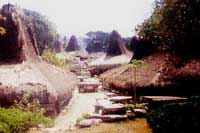 The main point is how to find out the boundary marks between inhabited and non-inhabited territory. The proposed concept is that the boundary should be defined not only by physical elements but also by or bio-cosmic energy as well. In conventional scientific point of view, it is usually regarded as spatio-anthropological paradigms with myths, legends, or traditions of beliefs. In the primitive age or even today, traditional rituals held in villages usually intended to bring a safety and secure life in certain villages’ territory (e.g. ritual of sêlamêtan, bersih desa, ruwatan, etc in Javanese villages). In traditional villages, the territory is often indicated by planted trees or bushes as “a fort”. So that in intention to conserve man-environment interrelation described above, vegetation use of spatial territorializing would be most reasonable method to be replicated when they make vast clustered dwellings. In Javanese old tradition, a forestry region is often regarded as a non-human dwellings space or non-occupied space.
 bserving its moderate climate, thriving and prosperous lands with abundant resources, it would be not too exorbitant to say that initially -as a host for peoples living in its environment- the nature of Nusantara is a space with extraordinary hospitality. The nature of Nusantara contributes special characters to its people, which is well known as “friendly to visitors, having perceptive way of thinking”, etc.
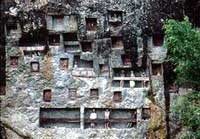 At a glance, it looks like a “given” character of the people. But people could not present real hospitality without a grateful attitude to whom or to which he believe and considered as the “Supreme Substance”, giving prosperity and saving his life. Having its own system of beliefs, each social group manifests its attitude in traditions that exist in diversity. But it seems that a common view and attitude is conserving nature. Hence, the hospitality of natural environment around them is reciprocated by the same attitude; people cultivate or take advantage of, but not to force the nature to fulfilling their greed.
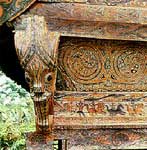 For many centuries, Southeast Asia regions including Nusantara became subjugated territory of the Northern countries (Western Europeans and Northern Americans). Executed in politico-military or physical methods, the first period --say before Second World War-- exploited explored natural resources: minerals, agricultural products, etc. The later period --especially in last four decades-- is the pretense of scientific methods. Undoubtedly, the aim of the second period has been to create markets for advanced technologies of the North, such as in genetics, informatics, robotics, nano-techs, etc. By spreading scientific information, values of truth, good, or beauty is “patterned”. A mislead in interpreting the slogans as “Information-Age”, “Globalization”, “Internationalization”, “Cosmopolitanism” and other names, would trap into the invisible loop hole, that is a scientific-politic-economical dependence to the Northern countries. The tall stacks of debts of Indonesia are undeniable reality. The winners of the game of power are the Northern countries. The disciplines of architecture and planning play a very little part of this big game. A symbolism is required in politics of culture, not only as a simple way to built mental attitude but also to create an applicable proper (read: peaceful) scientific perspective.